GE Dishwasher Profile Manual: A Comprehensive Guide (Updated 05/05/2026)
This manual provides detailed guidance for GE Profile dishwasher owners, offering insights into operation, features, and maintenance as of today, May 5th, 2026.
Explore ratings and comparisons to maximize your appliance experience, ensuring optimal performance and longevity with this comprehensive resource.
Welcome to the world of GE Profile dishwashers! These appliances represent a significant investment in your kitchen, designed to deliver sparkling clean dishes with advanced features and reliable performance. GE Profile dishwashers aren’t simply about washing dishes; they’re about elevating your entire kitchen experience.
This series blends innovative technology with sleek design, offering a range of models to suit various kitchen layouts and lifestyle needs. From powerful wash cycles to intelligent sensors, GE Profile dishwashers are engineered for efficiency and convenience. Understanding your dishwasher’s capabilities is key to unlocking its full potential.
This guide will serve as your comprehensive resource, walking you through everything from initial setup and operation to troubleshooting and maintenance. We’ll explore the unique features that set GE Profile apart, helping you achieve consistently superior cleaning results. Prepare to discover how to maximize your dishwasher’s performance and enjoy years of reliable service.

Understanding Your Dishwasher Model Number
Your GE Profile dishwasher’s model number is crucial for accessing specific information and support. Located typically on a sticker inside the dishwasher door (often on the side wall), this alphanumeric code unlocks a wealth of details about your appliance.
The model number isn’t just a random string of characters; it’s a key to identifying your dishwasher’s exact specifications, features, and compatible parts. When contacting customer support, ordering replacement components, or downloading manuals, having this number readily available is essential.
Decoding the model number reveals information about the manufacturing date, color, and specific features included in your model. GE uses this system to track and categorize its appliances, ensuring accurate service and support. Keep this number safe for future reference – it’s your dishwasher’s unique identifier!
Locating the GE Profile Dishwasher Manual Online
Accessing your GE Profile dishwasher manual online is quick and convenient. The official GE Appliances website (www.geappliances.com) hosts a comprehensive library of manuals for all their products, including dishwashers.
Simply navigate to the “Support” or “Owners Manuals” section of the website. You can then search for your specific model number – a critical step for finding the correct documentation. Alternatively, many third-party websites archive appliance manuals, offering another avenue for access.
Downloading the manual provides a readily available resource for troubleshooting, understanding features, and performing maintenance. Digital manuals are easily searchable, allowing you to quickly find answers to your questions. Keeping a digital copy on your computer or mobile device ensures you always have access to vital information.
Key Features of GE Profile Dishwashers
GE Profile dishwashers are renowned for their innovative features designed to deliver exceptional cleaning performance and convenience. These models often incorporate advanced wash systems, such as the Deep Clean wash cycle, targeting heavily soiled dishes.
Bottle Wash Jets provide focused cleaning for baby bottles, sports bottles, and other tall items. The AutoSense cycle intelligently adjusts wash settings based on soil levels, optimizing water and energy usage. A Sanitize Cycle offers enhanced hygiene, eliminating bacteria for a more thorough clean.
Many Profile models boast stainless steel interiors for durability and a sleek aesthetic. Quiet operation is a hallmark, ensuring minimal disruption to your household. Smart connectivity features, available on select models, allow remote control and monitoring via a smartphone app.
Deep Clean Wash Cycle

The Deep Clean Wash Cycle is a powerful feature on GE Profile dishwashers, specifically engineered to tackle heavily soiled cookware, casserole dishes, and baked-on food residue. This cycle utilizes increased water pressure and higher temperatures compared to standard wash cycles, ensuring a more thorough cleaning process.
It’s ideal for items that require intense scrubbing, saving you valuable time and effort. The cycle duration is typically longer than other settings, reflecting the intensified cleaning action. Pre-rinsing is generally not required, as the Deep Clean cycle is designed to handle substantial food particles.
However, delicate items should be avoided, as the high-intensity wash could potentially cause damage. Always check your dishwasher’s manual for specific recommendations regarding suitable dishware for this cycle.
Bottle Wash Jets
GE Profile dishwashers often feature dedicated Bottle Wash Jets, a specialized cleaning system designed for baby bottles, sports bottles, and other narrow-necked containers. These jets are strategically positioned to deliver a concentrated spray of water directly inside the bottles, ensuring thorough cleaning of hard-to-reach areas.
Typically, these jets are located on the upper rack and can be activated via a specific cycle or option. This feature minimizes the need for pre-soaking or manual scrubbing, saving time and effort. It’s particularly useful for removing milk residue or sports drink buildup.
Ensure bottles are securely placed to prevent them from shifting during the wash cycle. Refer to your model’s manual for optimal bottle placement and cycle selection for the best cleaning results.
AutoSense Cycle
The AutoSense cycle is a smart washing feature available on many GE Profile dishwashers, designed to automatically adjust wash settings based on the soil level of your dishes. Utilizing advanced sensor technology, the dishwasher assesses the water turbidity – essentially, how dirty the water is – during the initial wash phase.
Based on this assessment, the cycle modifies the wash time, water temperature, and rinse cycles to deliver optimal cleaning performance while conserving water and energy. This eliminates the guesswork of selecting the appropriate cycle for varying loads.
For heavily soiled dishes, the cycle will extend the wash time and increase water temperature. Conversely, for lightly soiled loads, it will shorten the cycle and use less water. This intelligent functionality provides convenience and efficiency.
Sanitize Cycle
The Sanitize cycle on your GE Profile dishwasher is engineered to eliminate 99.99% of common household bacteria, providing a higher level of cleanliness for dishes, glassware, and utensils. This cycle achieves sanitization through elevated water temperatures, reaching a final rinse temperature of 150°F (65.6°C).
This high-heat rinse is crucial for destroying bacteria and ensuring hygienic results, particularly beneficial for baby bottles, cutting boards, and items used for food preparation. The cycle duration is typically longer than standard wash cycles due to the extended heating process.
It’s recommended to use the Sanitize cycle periodically, especially when washing items that require a thorough disinfection. Always check your dishwasher’s manual to confirm the specific sanitization standards met by your model.
Dishwasher Control Panel Overview
The GE Profile dishwasher control panel is designed for intuitive operation, offering a range of cycles and options to customize your wash. Typically, you’ll find a digital display indicating cycle selection, remaining time, and any error codes. Power and Cancel buttons are prominently featured for immediate control.
Cycle selection buttons allow you to choose from options like AutoSense, Deep Clean, Sanitize, and Normal wash. Option buttons, such as Heated Dry, Delay Start, and High Wash Temperature, modify the cycle’s performance. A dedicated button often activates features like Bottle Wash Jets.
The display panel also provides indicators for rinse aid levels and cycle status. Familiarizing yourself with the panel’s layout and functions will ensure efficient and effective dishwasher use.
Cycle Selection Guide
Choosing the right cycle is crucial for optimal cleaning and protecting your dishware. The Normal Wash cycle is ideal for everyday loads with moderate soil levels. For heavily soiled pots and pans, select the Deep Clean cycle, utilizing higher temperatures and extended wash times.
The AutoSense cycle intelligently adjusts wash parameters based on soil levels, conserving water and energy. For delicate items like glassware, the Gentle cycle provides a softer wash. The Sanitize cycle eliminates bacteria, perfect for baby bottles or cutting boards.
A Quick Wash option offers a shorter cycle for lightly soiled dishes. Utilize the Rinse Only cycle to pre-wash dishes or prevent food from drying on. Always refer to your specific model’s manual for detailed cycle descriptions and recommendations.
Options Buttons Explained (Delay Start, Heated Dry, etc.)
GE Profile dishwashers offer several options to customize your wash cycle. The Delay Start button allows you to schedule the dishwasher to run at a later time, often taking advantage of off-peak energy rates. Heated Dry utilizes a heating element for faster and more thorough drying, though it consumes more energy.
The ProDry option, available on select models, enhances drying performance, particularly for plastics. Sanitize Option boosts water temperature for enhanced bacteria elimination. High Temp Wash increases wash temperature for stubborn food residue.
My Favorite allows you to save your preferred cycle settings for quick access. Explore your model’s manual to fully understand each option and optimize your dishwashing routine for efficiency and sparkling results.
Display Indicators and Error Codes
The GE Profile dishwasher’s display panel utilizes indicators to communicate the cycle status and any potential issues. A Cycle Progress bar visually represents the remaining wash time. Option lights illuminate when specific features like Heated Dry or Delay Start are activated.
Error codes signal malfunctions requiring attention. Common codes include F01 (water inlet issue), F02 (drainage problem), and F18 (communication error). Refer to your specific model’s manual for a complete list and troubleshooting steps.
A flashing light often indicates an active cycle or a paused operation. Ignoring error codes can lead to further damage, so prompt investigation is crucial. Consult the manual or GE’s support website for detailed explanations and potential solutions.
Loading Your GE Profile Dishwasher Correctly
Proper loading is crucial for optimal cleaning performance with your GE Profile dishwasher. Avoid overcrowding, ensuring water reaches all surfaces. Face soiled surfaces towards the spray arms for effective cleaning. Check that items don’t block the detergent dispenser or the spray arms’ rotation.
Larger items should be placed along the sides and back, while smaller items go in front. Avoid nesting bowls or cups, allowing water to circulate freely. Secure lightweight plastics to prevent them from flipping during the wash cycle.
Incorrect loading can result in poorly cleaned dishes or even damage. Refer to the detailed loading diagrams in your manual for specific recommendations based on your dishwasher model.
Upper Rack Loading Tips
The upper rack is designed for delicate items, glasses, cups, and smaller dishes. Ensure these items are securely placed in the racks to prevent breakage during the wash cycle. Adjust the rack height if necessary to accommodate taller items, but avoid blocking the spray arm.
Load glasses and cups at an angle to allow water to drain effectively. Place plastic items on the upper rack as they are more susceptible to heat damage. Avoid overloading the upper rack, as this can hinder water circulation and cleaning performance.
Check for any obstructions before starting the dishwasher. Properly loaded upper racks contribute significantly to sparkling clean and protected dishware.
Lower Rack Loading Tips
The lower rack is ideal for larger, heavier items like pots, pans, and plates. Face soiled surfaces towards the center of the dishwasher for optimal cleaning. Ensure items don’t obstruct the spray arm’s rotation; a clear path is crucial for effective washing.
Securely load large items to prevent them from shifting during the cycle. Avoid nesting bowls or stacking plates directly on top of each other, as this can impede water flow. Position baking sheets and cutting boards along the sides to maximize space and ensure thorough cleaning.
Check that nothing protrudes and blocks the detergent dispenser. A well-loaded lower rack guarantees powerful cleaning for your toughest dishwashing challenges.
Silverware Basket Usage
The silverware basket in your GE Profile dishwasher is designed for efficient and hygienic utensil cleaning. Alternate placing forks, spoons, and knives to prevent nesting, which can hinder water reaching all surfaces. Mix utensil types to further reduce clumping and improve wash performance.
For optimal results, ensure handles are down, but avoid overcrowding the basket. Some baskets feature dividers; utilize these to separate utensils and prevent them from sticking together. Long utensils, like serving spoons, can be laid flat if the basket allows, or positioned along the perimeter.
Check for any items blocking the spray arms before starting the cycle. Proper silverware basket loading ensures sparkling clean utensils every time.
Dishwasher Maintenance & Cleaning
Regular maintenance is crucial for optimal performance and longevity of your GE Profile dishwasher. Consistent cleaning prevents buildup and ensures hygienic operation. Monthly filter cleaning is paramount; remove and rinse the filter under warm water, removing any food particles or debris. A clogged filter reduces cleaning effectiveness.
Periodically run a dishwasher cleaning cycle using a dedicated dishwasher cleaner. This helps remove grease, limescale, and odors. Wipe down the door and control panel with a damp cloth and mild detergent. For stainless steel exteriors, use a stainless steel cleaner to prevent streaks.
Inspect the spray arms for blockages and clear them as needed. Maintaining a clean dishwasher guarantees sparkling dishes and extends its lifespan.
Cleaning the Filter System
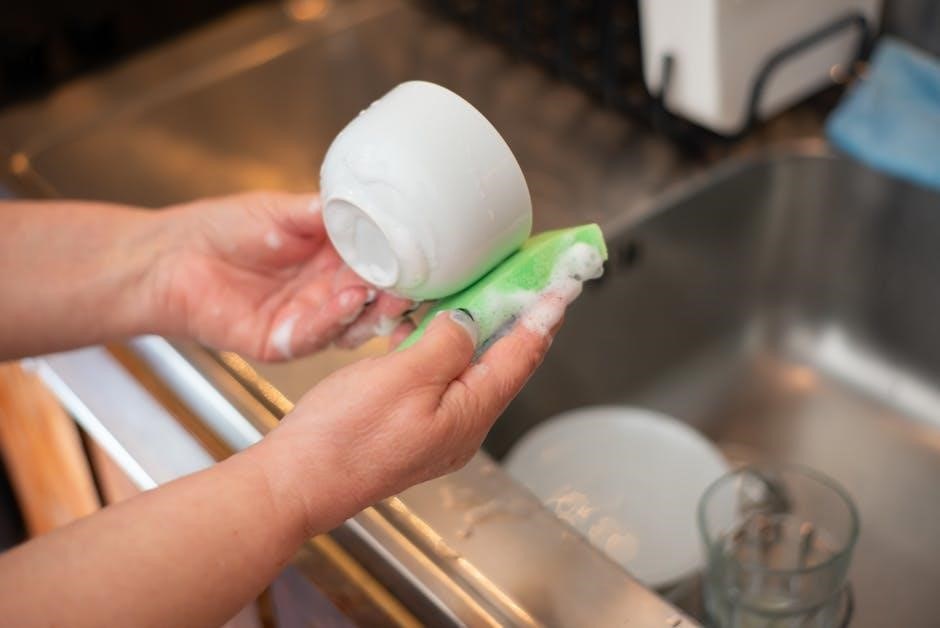
Maintaining a clean filter system is vital for your GE Profile dishwasher’s performance. Located at the bottom of the dishwasher tub, the filter traps food particles preventing them from recirculating. Regularly, at least monthly, remove the filter assembly – consult your model’s specific manual for location and removal instructions.

Rinse the filter thoroughly under warm running water. Use a soft brush to gently scrub away stubborn debris. Inspect the filter for any damage, such as cracks or tears, and replace if necessary. Ensure the filter is securely reinstalled before operating the dishwasher.
A clogged filter reduces cleaning efficiency and can lead to drainage issues. Prioritizing filter maintenance ensures optimal cleaning results and prolongs the dishwasher’s lifespan.
Running a Dishwasher Cleaning Cycle
To maintain peak performance, GE Profile dishwashers benefit from regular cleaning cycles. These cycles utilize higher water temperatures and specialized detergents to remove built-up residue, grease, and odors. Typically, a cleaning cycle should be run monthly, or more frequently with hard water.
Use a dishwasher cleaner specifically designed for this purpose. Place the cleaner in the detergent dispenser, ensuring the dishwasher is empty. Select the designated cleaning cycle – often labeled “Dishwasher Clean” or similar – and initiate the cycle. Avoid interrupting the cycle for optimal results.
Regular cleaning prevents buildup that can affect wash performance and contribute to unpleasant smells. This proactive maintenance extends the life of your appliance and ensures consistently sparkling dishes.
Exterior Cleaning and Stainless Steel Care
Maintaining the exterior of your GE Profile dishwasher is crucial for preserving its appearance. For standard finishes, a mild dish soap diluted in warm water is generally sufficient. Apply the solution with a soft cloth, gently wiping down the door, sides, and control panel. Avoid abrasive cleaners that can scratch the surface.
For stainless steel models, special care is required to prevent streaks and water spots. Use a stainless steel cleaner and polish, applying it in the direction of the grain. Always wipe away excess cleaner with a clean, dry microfiber cloth. Regular polishing helps maintain the shine and protects against corrosion.
Promptly wipe up spills to prevent staining. Avoid harsh chemicals and scouring pads, as these can damage the finish. Consistent, gentle cleaning will keep your dishwasher looking its best.
Troubleshooting Common Issues
Encountering issues with your GE Profile dishwasher can be frustrating, but many problems have simple solutions. This section addresses common concerns to help you restore functionality. If the dishwasher won’t start, check the power supply, door latch, and control panel lock. For drainage problems, inspect the drain hose for kinks or clogs and ensure the air gap (if present) is clear.
Leaks often stem from improper loading, a damaged door gasket, or loose connections. Error codes displayed on the control panel provide valuable diagnostic information; consult the manual for specific interpretations and recommended actions. Before attempting any repairs, disconnect the power supply to prevent electrical shock.
If issues persist, contacting a qualified appliance repair technician is recommended.
Dishwasher Not Starting
A GE Profile dishwasher failing to start can stem from several causes. First, verify the power supply – check the circuit breaker or fuse box to ensure power is reaching the appliance. Inspect the door latch; it must securely click shut to activate the dishwasher. Ensure the control panel isn’t locked, as some models feature a child lock function.
If these checks don’t resolve the issue, the start/cancel button might be faulty. Test the thermal fuse, a safety component that can trip if the dishwasher overheats. A malfunctioning control board could also prevent startup, requiring professional diagnosis.
Before troubleshooting, always disconnect power. Consult your model’s specific manual for detailed instructions and diagrams;
Dishwasher Not Draining
A GE Profile dishwasher refusing to drain is a common issue with several potential causes. Begin by checking the drain hose for kinks or obstructions. Ensure the hose isn’t inserted too far into the garbage disposal or sink drain, as this can create a siphon effect. Inspect the air gap (if installed) for clogs;
The drain filter is a frequent culprit; remove and thoroughly clean it, removing any food particles or debris. A clogged drain pump can also prevent drainage, potentially requiring professional attention. Verify the garbage disposal (if connected) is clear and functioning correctly.
Always disconnect power before inspecting internal components. Refer to your model’s manual for specific filter locations and pump access instructions.
Dishwasher Leaking
Discovering a leak from your GE Profile dishwasher requires immediate attention. First, check the door gasket for damage or debris, ensuring a tight seal. Inspect the spray arms for cracks, as these can cause water to spray outside the tub. Examine the water inlet valve and connections for any signs of leakage.
A loose drain hose connection is another common cause; tighten clamps and ensure proper fitting. Verify the float switch isn’t stuck in the up position, preventing proper water level control. Inspect the pump and motor seals for wear and tear.
Always disconnect power before investigating internal components. Consult your model’s manual for specific component locations and repair guidance.
Error Code Interpretation & Solutions
GE Profile dishwashers utilize error codes to diagnose issues. These codes, displayed on the control panel, pinpoint the source of the problem, aiding in efficient troubleshooting. Common codes include F1 (water temperature issue), F2 (drainage problem), and F9 (communication error).
Refer to your specific model’s manual for a complete list and detailed explanations of each code. For F1, check the heating element and thermostat. F2 often requires clearing a blocked drain hose or filter. F9 may necessitate a reset of the control board.
Before attempting repairs, disconnect power. If the error persists after following the suggested solutions, contact GE’s customer support or a qualified appliance technician for assistance. Ignoring error codes can lead to further damage.
GE Profile Dishwasher Parts & Replacement
Maintaining your GE Profile dishwasher often requires replacing worn parts. Common components needing attention include spray arms, door hinges, and the drain pump. Genuine GE parts are recommended to ensure compatibility and performance, preserving the dishwasher’s warranty.
Locating replacement parts is straightforward. GE’s official website offers a parts store with diagrams for easy identification. Authorized GE parts retailers and appliance repair shops also stock these components. Always have your model number handy when ordering to guarantee a correct fit.
DIY replacement is possible for some parts, but safety precautions are crucial. Disconnect power before any repair and consult online resources or repair manuals for guidance. For complex repairs, professional assistance is advised.
Where to Find Replacement Parts
Sourcing replacement parts for your GE Profile dishwasher is convenient through several channels. The primary source is the official GE Parts Store online (geapplianceparts.com), offering a comprehensive catalog with detailed diagrams to pinpoint the exact component needed. Authorized GE appliance service centers also maintain parts inventories and can assist with ordering.
Numerous online retailers, such as AppliancePartsPros and RepairClinic, specialize in appliance parts and often carry GE components. Local appliance repair shops are another valuable resource, providing both parts and expert advice. Always verify the part’s compatibility with your specific model number before purchasing.
Comparing prices across different vendors is recommended to secure the best deal. Ensure the retailer offers a return policy in case of incorrect parts or defects.
Common Parts Requiring Replacement
Several components in GE Profile dishwashers are prone to wear and tear, necessitating eventual replacement. The spray arms often become clogged or cracked, reducing cleaning effectiveness. Dishwasher pumps can fail, leading to drainage issues or complete operational failure. Heating elements frequently burn out, impacting drying performance.
Door gaskets deteriorate over time, causing leaks. Float switches can malfunction, preventing the dishwasher from filling or draining correctly. Control boards, while more complex, are susceptible to electronic failure. Wash impeller assemblies may wear, diminishing water circulation.
Silverware basket rollers and racks can break, hindering proper utensil placement. Regularly inspecting these parts and addressing issues promptly can prevent more significant problems and extend the dishwasher’s lifespan.
Safety Precautions for DIY Repairs
Attempting DIY repairs on your GE Profile dishwasher requires strict adherence to safety guidelines. Always disconnect the power supply at the circuit breaker before commencing any work – electricity and water are a dangerous combination! Turn off the water supply to the dishwasher to prevent flooding.
Wear appropriate safety gear, including gloves and eye protection. Be cautious when handling sharp components, such as broken glass or metal edges. Never work on a dishwasher that is still connected to the power or water supply.
If you are uncomfortable with any aspect of the repair, consult a qualified appliance technician. Improper repairs can lead to further damage, injury, or void your warranty. Proper grounding is crucial; ensure all connections are secure.
Comments