Lincoln Electric AC 225 Arc Welder Manual: Article Plan
This comprehensive guide details the Lincoln Electric AC 225‚ covering specifications‚ safety‚ setup‚ operation‚ troubleshooting‚ and maintenance—a vital resource for users.
The Lincoln Electric AC 225 is a robust‚ single-operator‚ air-cooled arc welder renowned for its dependability and portability. Manufactured in Cleveland‚ Ohio‚ it’s a staple for DIY enthusiasts‚ farmers‚ and professionals alike. This manual provides essential information for safe and effective operation‚ covering everything from initial setup to troubleshooting.
With a product number and readily available support (PH: 1.216-481-8100‚ www.lincolnelectric.com)‚ the AC 225 offers a versatile solution for various welding projects‚ particularly stick welding (SMAW). Understanding this manual ensures optimal performance and longevity.
Key Features and Specifications
The Lincoln Electric AC 225 boasts a rated output of 225 Amps at 25 Volts on AC‚ and 125 Amps at 25 Volts on DC (where applicable). Its input power requirements vary‚ but it’s designed for standard input current.
Key features include its portability and suitability for stick electrodes‚ with recommendations for JET-LH 78 (7018 H4R) for ¼” steel and up. Accessory options like the K761 wheel kit enhance usability. Code numbers range from 10420 to 11675.
Input Power Requirements
The Lincoln Electric AC 225 is designed to operate on a variety of input power configurations‚ though specific requirements depend on the model and regional standards. Generally‚ it accepts single-phase AC power.
The input voltage is typically 120V or 240V‚ and the input current is rated at 50 Amps. Always verify the welder’s nameplate and local electrical codes to ensure compatibility and safe operation before connecting to a power source.
Rated Output Current and Voltage (AC)
The Lincoln Electric AC 225 boasts a rated output of 225 Amps at a voltage of 25 Volts when operating in AC mode. This provides sufficient power for a wide range of stick welding applications on various metal thicknesses.
The duty cycle is 20% at this output‚ meaning it can sustain this level for two minutes out of every ten. Understanding these ratings is crucial for preventing overheating and ensuring optimal welding performance and longevity of the machine.
Rated Output Current and Voltage (DC ౼ if applicable)
While primarily an AC welder‚ some AC 225 models (AC/DC 225/125) offer DC capabilities. In DC mode‚ the rated output is 125 Amps at 25 Volts‚ also with a 20% duty cycle.
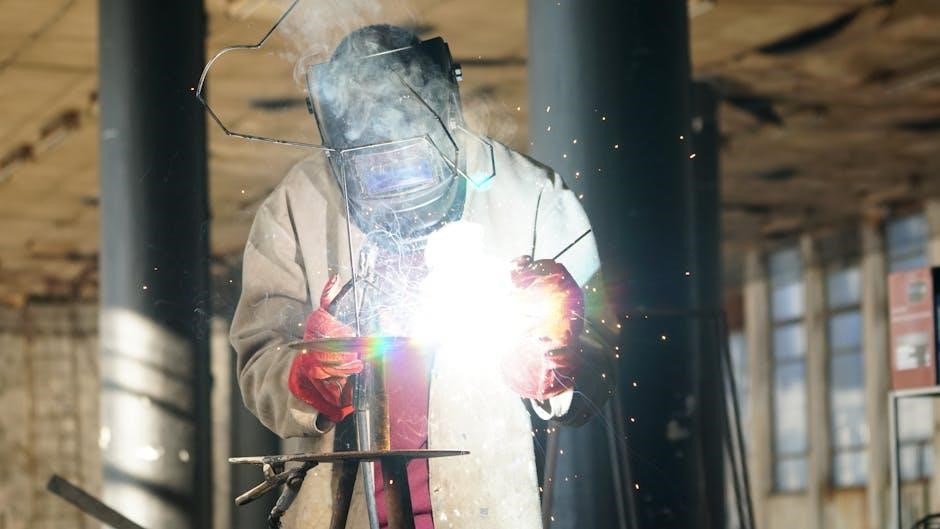
DC welding provides deeper penetration and is ideal for certain materials and electrode types. However‚ the AC 225’s DC output is lower than its AC output‚ impacting the thickness of materials it can effectively weld. Always verify your model’s capabilities.
Safety Precautions
Welding presents significant hazards; prioritize safety. Always wear appropriate personal protective equipment (PPE)‚ including a welding helmet‚ gloves‚ and fire-resistant clothing. Ensure adequate ventilation to avoid inhaling harmful fumes and gases.
Be aware of electrical shock hazards and arc radiation. Work in a dry environment and properly ground the welder. Inspect cables for damage before each use. Follow all safety guidelines outlined in the manual to prevent injury.
Electrical Shock Hazards
Electrical shock can be fatal. Never touch live electrical parts. Ensure the welder is properly grounded using a suitable grounding conductor. Inspect all cables and connections for damage before operation.
Work in a dry area to minimize shock risk. Disconnect input power before performing any maintenance or repairs. Avoid welding near flammable materials and be cautious of confined spaces. Always follow established safety procedures to prevent electrical accidents.
Fumes and Gases
Welding produces fumes and gases that can be hazardous to your health. Ensure adequate ventilation – weld outdoors or use a fume extractor. These fumes contain particles from the electrode and base metal‚ potentially including heavy metals.
Avoid breathing fumes; wear a respirator approved for welding fumes. Be aware of gases like ozone and carbon monoxide. Keep your head out of the fume plume and inform others in the area about the hazards.
Arc Radiation
Arc welding generates intense radiation‚ including ultraviolet (UV) and infrared (IR) light‚ which can be extremely harmful. Protect your eyes and skin! Always wear a properly shaded welding helmet with the correct lens for the amperage being used.
Wear appropriate clothing – long sleeves‚ gloves‚ and a welding jacket – to prevent skin burns. Avoid looking directly at the arc‚ even for a moment‚ as it can cause arc eye (photokeratitis) and skin cancer;
Setting Up the AC 225
Proper setup is crucial for safe and effective welding. Begin with a thorough initial inspection‚ checking for any damage to the welder‚ cables‚ and connections. Grounding is essential – ensure a secure connection to a known earth ground.
Attach the work clamp firmly to the workpiece‚ as close to the welding area as possible. Before starting‚ familiarize yourself with the welder’s controls to ensure correct operation.
Initial Inspection
Before each use‚ a detailed inspection is paramount for safety and performance. Carefully examine the AC 225 for any visible damage – cracked cases‚ frayed power cords‚ or loose connections. Inspect welding cables for insulation damage and ensure the work clamp is secure.
Verify all connections are tight and clean. A pre-use check minimizes risks and ensures optimal welding conditions‚ extending the welder’s lifespan.
Grounding Instructions
Proper grounding is crucial for electrical safety. Connect the welder to a grounded electrical outlet‚ ensuring the grounding wire is intact. For stationary installations‚ a dedicated grounding conductor is recommended.
The frame of the AC 225 must be grounded to prevent electrical shock. Always verify grounding before operation‚ and never remove the grounding prong from the plug. A secure ground path is essential.
Work Clamp Connection
Securely attach the work clamp to the workpiece‚ ensuring a clean‚ metal-to-metal contact. Avoid painted or corroded surfaces‚ as they impede current flow. The clamp should be as close to the welding area as possible to minimize arc length and improve weld quality.
A poor connection can cause unstable arcs and spatter. Regularly inspect the clamp for damage and ensure a tight‚ reliable grip throughout the welding process.
Understanding the Controls
The Lincoln AC 225 features straightforward controls for amperage adjustment. This determines the welding current‚ influencing arc penetration and weld bead size. Rotate the control knob to select the appropriate amperage based on electrode type‚ material thickness‚ and desired weld characteristics.
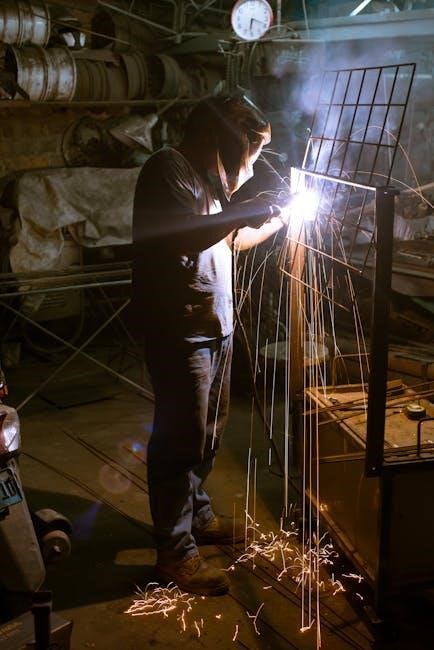
Familiarize yourself with the control’s range to achieve optimal settings for various welding applications. Precise control is key to successful welding.
Amperage Control
The AC 225’s amperage control directly impacts weld quality. Lower amperage settings are suitable for thinner materials‚ preventing burn-through‚ while higher settings tackle thicker metals. A 50-amp output range allows versatility. Experimentation is crucial to find the ideal setting for each electrode and material combination.
Refer to electrode manufacturer recommendations for specific amperage guidelines‚ ensuring strong‚ consistent welds.
Polarity Selection (if applicable)
The Lincoln Electric AC 225 is primarily an AC welder‚ simplifying operation by eliminating the need for polarity selection in most standard stick welding applications. However‚ when utilizing DC capabilities (if equipped – check your machine’s code number)‚ proper polarity is vital.
Typically‚ reverse polarity (electrode positive) is used with most electrodes‚ but always consult the electrode manufacturer’s data for optimal results.
Welding Processes Supported
The Lincoln Electric AC 225 excels in Stick Welding (SMAW)‚ offering versatility for various projects. Its AC output is ideal for general-purpose welding on mild steel‚ making it a popular choice for maintenance and repair work.
Certain models‚ indicated by specific code numbers (like AC/DC 225/125)‚ also support DC welding‚ expanding capabilities to include more specialized applications and electrode types.
Stick Welding (SMAW)
The AC 225 is primarily designed for Shielded Metal Arc Welding (SMAW)‚ commonly known as stick welding. This process utilizes a consumable electrode to create the weld‚ offering portability and suitability for outdoor applications.
Successful stick welding with the AC 225 relies on proper amperage settings‚ electrode selection – like JET-LH 78 (7018 H4R) – and consistent arc length maintenance for strong‚ quality welds on various steel thicknesses.
DC Welding Capabilities (if applicable)
The Lincoln Electric AC 225 is fundamentally an AC welder; however‚ certain models‚ like the AC/DC 225/125‚ offer DC welding capabilities. This expands versatility for welding different materials and employing techniques requiring direct current.
DC welding generally provides a more focused arc‚ potentially leading to deeper penetration and cleaner welds‚ particularly beneficial for thicker materials or specific electrode types. Refer to your machine’s code number to confirm DC functionality.
Electrode Selection Guide
Choosing the right electrode is crucial for successful welding with the AC 225. The chart recommends electrodes based on material thickness and type. For ¼” steel and upwards‚ JET-LH 78 (7018 H4R) electrodes are highly recommended for superior weld quality.
Lincoln Electric emphasizes using their consumables for optimal performance. Consider electrode diameter – 3/32” is a common starting point – and match it to the material and desired weld characteristics.
Recommended Electrodes for Different Materials
The AC 225’s versatility allows welding various materials‚ but electrode selection is key. While specific recommendations depend on the alloy‚ the JET-LH 78 (7018 H4R) excels on carbon steel‚ particularly for thicker sections.
For low-alloy steels‚ consider electrodes designed for those compositions. Always consult Lincoln Electric’s data sheets for detailed compatibility information and optimal welding parameters for each material type.
JET-LH 78 (7018 H4R) Electrode Usage
The JET-LH 78 (7018 H4R) is a low-hydrogen electrode ideal for high-strength‚ ductile welds on carbon and low-alloy steels. It requires a dry storage method to maintain low-hydrogen properties.

For optimal results with the AC 225‚ use DC+ polarity and maintain a short arc length. This electrode is particularly effective on steel 1/4 inch thick and above‚ delivering excellent weld quality.
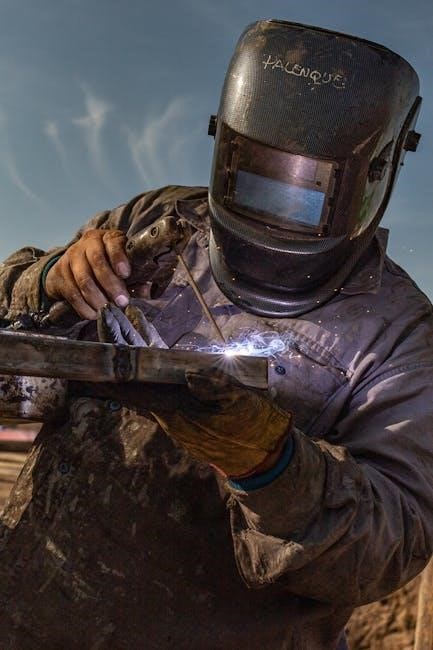
Welding Techniques with the AC 225
Mastering the AC 225 requires practice in striking and maintaining a stable arc. Initiate the arc with a quick flick of the wrist‚ then establish a consistent arc length.
Travel speed impacts weld bead appearance; slower speeds create wider beads‚ while faster speeds yield narrower ones. Proper technique ensures strong‚ clean welds. Experiment with amperage settings to suit material thickness and electrode type.
Striking an Arc
Successfully striking an arc with the AC 225 involves a quick‚ decisive motion. Employ the “scratch” or “tap” method‚ briefly touching the electrode to the workpiece and immediately lifting it slightly.
Alternatively‚ use the “open arc” technique‚ holding the electrode at a small angle and swiftly bringing it down. Maintaining a short arc length is crucial for stability and preventing sticking. Practice is key to consistent arc starts.
Maintaining a Stable Arc
A stable arc relies on consistent technique and proper settings. Maintain a steady hand and a consistent travel speed‚ keeping the arc length short and uniform. Listen to the arc – a smooth‚ crackling sound indicates stability.
Adjust amperage based on material thickness and electrode type. Weaving or stringer beads influence arc characteristics; practice both to find what works best for your application and desired weld profile.
Troubleshooting Common Issues
If the welder fails to power on‚ check the input power‚ circuit breakers‚ and power switch. Poor weld quality often stems from incorrect amperage‚ improper electrode angle‚ or contaminated metal.

Erratic arcs can indicate loose connections or a failing ground clamp. Address these promptly. Refer to the manual’s diagrams for component locations and troubleshooting steps to resolve issues efficiently and safely.
Welder Not Powering On
If your AC 225 doesn’t power on‚ first verify the input power source is active and matches the welder’s requirements. Inspect the power cord for damage and ensure a secure connection.
Check the circuit breaker or fuse on both the welder and the power circuit. A tripped breaker or blown fuse is a common cause. Confirm the on/off switch is fully engaged.
Poor Weld Quality
Substandard welds with the AC 225 often stem from incorrect amperage settings; adjust based on material thickness and electrode type. Ensure proper work and ground clamp connections for consistent current flow.
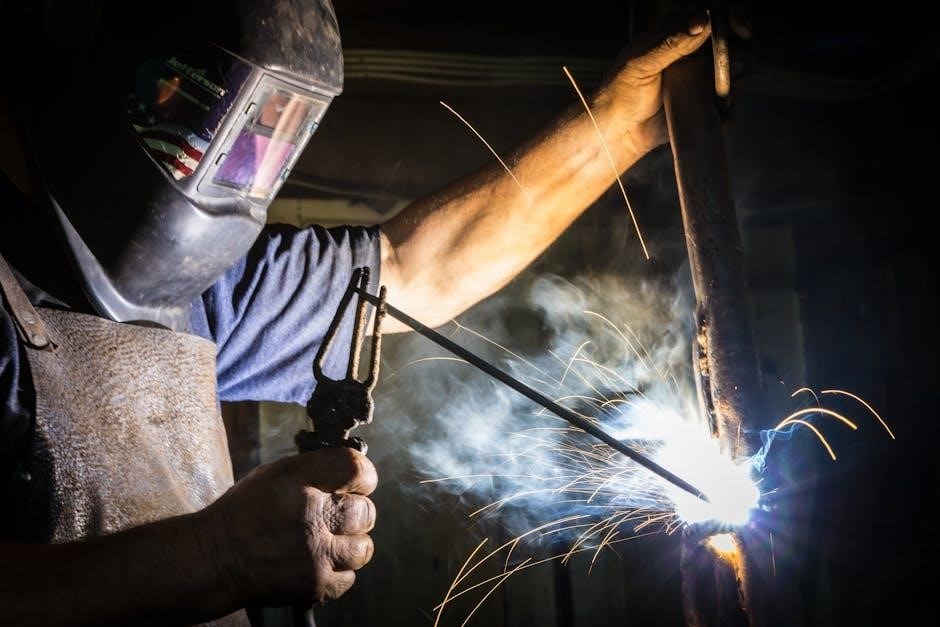
Travel speed significantly impacts weld quality – too fast yields thin‚ weak welds‚ while too slow causes excessive buildup. Electrode angle and arc length must be maintained for optimal results. Use Lincoln Electric consumables for best performance.
Maintenance and Care
Regular maintenance extends the life of your Lincoln Electric AC 225. Frequently cleaning the welder removes dust and debris‚ preventing overheating. Inspect cables and connections for damage – frayed cables or loose connections compromise performance and safety.
Periodically check the fan for proper operation. Keeping the unit clean and connections secure ensures reliable operation and minimizes potential issues‚ maximizing welding efficiency.
Cleaning the Welder
Maintaining a clean Lincoln Electric AC 225 is crucial for optimal performance. Regularly remove dust‚ dirt‚ and metal shavings from the exterior using compressed air or a brush. Cleaning prevents overheating and ensures proper ventilation. Pay close attention to ventilation openings‚ keeping them unobstructed.
Avoid using solvents‚ as they may damage the unit’s finish. A clean welder operates more efficiently and reliably‚ extending its lifespan.
Inspecting Cables and Connections
Regularly inspect the work and electrode cables for cracks‚ fraying‚ or damage to the insulation. Check all connections – at the welder‚ work clamp‚ and electrode holder – ensuring they are tight and free of corrosion. Loose or damaged connections can cause voltage drops‚ unstable arcs‚ and potential safety hazards.
Replace worn cables immediately to maintain weld quality and prevent electrical shock.
Parts List and Diagrams
The manual includes detailed parts lists and diagrams illustrating the various sub-assemblies of the Lincoln Electric AC 225. These diagrams are crucial for identifying components during maintenance or repair. Part numbers are provided‚ facilitating accurate ordering of replacement parts.
This documentation assists in efficient troubleshooting and ensures the welder’s longevity.
Accessory Options
Enhance your Lincoln Electric AC 225’s capabilities with available accessories. A notable option is the Wheel Kit (K761)‚ enabling easy portability around the workshop. This kit includes an axle‚ two wheels‚ and necessary hardware for quick installation.
These accessories improve workflow and convenience‚ making the AC 225 even more versatile for various welding applications and job sites.
Wheel Kit Installation (K761)
The Lincoln Electric K761 Wheel Kit simplifies AC 225 portability. Installation is straightforward‚ requiring minimal tools and time – often completed in minutes. The kit contains an axle‚ two durable wheels‚ and all necessary mounting hardware.
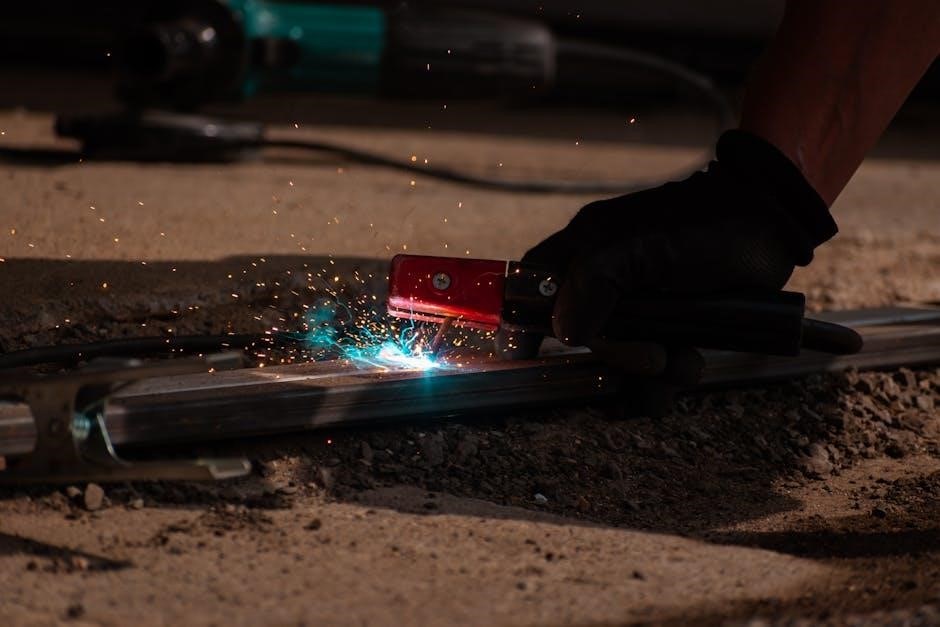
Follow the included instructions carefully to ensure secure attachment and stable operation. This accessory significantly enhances maneuverability‚ especially in larger workspaces or job sites.
Understanding Code Numbers (10420‚ 10421‚ etc.)
Lincoln Electric utilizes code numbers like 10420‚ 10421‚ and 10422 to identify specific AC 225 welder configurations. These numbers denote variations in features‚ included accessories‚ or manufacturing dates.
Referring to the correct code number is crucial when ordering parts or seeking support. The operator’s manual applies to a range of these codes (10420-10424‚ 11074-11675)‚ ensuring compatibility across similar models.
Manual Revision History (P-65-A.1.a)
The designation “P-65-A.1.a” indicates the revision level of this Lincoln Electric AC 225 manual. This coding system tracks updates and changes made to the document over time.
The “a” suffix signifies a minor revision‚ likely involving clarifications or corrections. Always ensure you have the latest version for accurate information regarding safety‚ operation‚ and maintenance procedures. Referencing the revision code guarantees you’re using current guidance.
Warranty Information
Lincoln Electric stands behind the AC 225 with a manufacturer’s warranty‚ protecting against defects in materials and workmanship. Warranty duration varies; consult your purchase documentation for specific terms and conditions.
The warranty typically excludes misuse‚ abuse‚ or unauthorized modifications. Proper registration of your welder is crucial to activate warranty coverage. Contact Lincoln Electric support for claim procedures and detailed warranty specifics.
Contacting Lincoln Electric Support
For assistance with your Lincoln Electric AC 225‚ reach out to their dedicated support team. You can call them at 1.216-481-8100 or visit their website at www.lincolnelectric.com for comprehensive resources.
Online support includes FAQs‚ troubleshooting guides‚ and downloadable manuals. Lincoln Electric’s knowledgeable representatives are available to address your questions and provide expert guidance regarding your welding equipment.
Frequently Asked Questions (FAQ)
Q: Where can I find the AC 225 manual? A: Download it online from various sources‚ including Lincoln Electric’s website and manual libraries. Q: What is Code Number 10420? A: It identifies specific AC 225 models.
Q: What electrodes work best? A: Lincoln Electric recommends JET-LH 78 (7018 H4R) for optimal performance. Q: Can I add a wheel kit? A: Yes‚ the K761 wheel kit simplifies portability.
Where to Download the Manual
The Lincoln Electric AC-225-S operator’s manual is readily available online. Numerous websites host downloadable PDF versions‚ including dedicated manual libraries and Lincoln Electric’s official support pages. Searching for “Lincoln AC 225 manual” yields several results.
Ensure the downloaded manual corresponds to your welder’s Code Number (e.g.‚ 10420‚ 10421) for accurate information. Digital copies offer convenient access to crucial safety and operational guidance.
Related Lincoln Electric Products
Lincoln Electric offers a wide range of welding solutions complementing the AC 225. Consider exploring their diverse electrode selection‚ particularly the JET-LH 78 (7018 H4R) for high-quality welds.
Additional accessories like the K761 Wheel Kit enhance portability. For more advanced needs‚ investigate Lincoln Electric’s DC welding machines and auto-darkening helmets‚ expanding your capabilities beyond basic stick welding.
The Lincoln Electric AC 225 is a robust and reliable machine‚ capable of tackling diverse welding projects. Consistent use of Lincoln Electric consumables‚ like JET-LH 78 electrodes‚ ensures optimal performance and weld quality.

Regular maintenance‚ referencing this manual‚ will extend its lifespan. By understanding its features and adhering to safety guidelines‚ you’ll unlock the AC 225’s full potential for years to come.
Comments