The Six Trials of Jesus: A Comprehensive Overview
Exploring the trials, from Gethsemane’s arrest to Pilate’s condemnation, reveals a rapid sequence – six trials within twelve hours!
Resources, like a “Six Trials of Jesus PDF”, detail this intense legal and religious scrutiny, offering a comprehensive examination of each stage.
Historical Context and Significance
The six trials of Jesus unfolded within the complex socio-political landscape of first-century Judea, then under Roman occupation. Understanding this context is crucial when studying resources like a “Six Trials of Jesus PDF”. Jewish religious authorities, particularly the Sanhedrin, operated under Roman oversight, possessing limited judicial autonomy, especially concerning capital punishment.
The accusations leveled against Jesus – blasphemy before the Sanhedrin, and sedition (claiming kingship) before Pilate – were strategically framed to appeal to both Jewish law and Roman concerns. Pilate, as the Roman prefect, held ultimate authority and was wary of unrest. The Jewish leaders exploited this, fueling anxieties about Jesus potentially inciting rebellion.
These trials weren’t simply legal proceedings; they were deeply intertwined with religious tensions, political maneuvering, and the fulfillment of prophetic scriptures. A detailed PDF resource illuminates how each trial served specific purposes for the involved parties, ultimately leading to Jesus’ crucifixion, a pivotal event in Christian theology.
The Arrest in Gethsemane
The arrest in Gethsemane, detailed in accounts analyzed within a “Six Trials of Jesus PDF”, marks the immediate precursor to the series of trials. Jesus, after sharing a final meal with his disciples, retreated to the Garden of Gethsemane to pray. He was betrayed by Judas Iscariot, identified by a kiss to the Roman cohort and temple guards sent to apprehend him.
This arrest wasn’t a public, formal legal process, but a clandestine operation orchestrated by Jewish leaders seeking to avoid a public outcry. The swiftness of the arrest, occurring around midnight, underscores the urgency and pre-planning involved. Jesus offered no resistance, submitting to his captors, a detail often highlighted in scholarly analyses found in comprehensive PDF resources.
Following the arrest, Jesus was bound and led before Annas, the former High Priest, initiating the first stage of the trials. The garden setting and the manner of arrest are significant, setting the tone for the subsequent, increasingly formalized, legal proceedings.
First Trial: Before Annas, the Former High Priest
The initial examination before Annas, as explored in a “Six Trials of Jesus PDF”, was deeply flawed from a legal standpoint. Annas, though no longer the official High Priest, wielded considerable influence. This trial wasn’t a formal session of the Sanhedrin, lacking proper witnesses and procedures.
Annas’s questioning focused on Jesus’s teachings and claims, seeking to establish grounds for accusing him of blasphemy. Jesus admitted to being the Messiah, a declaration considered a capital offense by Jewish law. However, the illegality of the proceedings meant any testimony or admission held no legitimate weight.
This initial interrogation served primarily as a preliminary assessment and an attempt to gather information. Annas ultimately deemed Jesus worthy of being handed over to the Sanhedrin, setting in motion the next phase of the trials. Detailed analyses within the PDF highlight the political motivations behind Annas’s actions.

Second Trial: Before the Sanhedrin
The Sanhedrin’s session, meticulously documented in resources like a “Six Trials of Jesus PDF”, represented a more formal, yet still deeply biased, attempt to condemn Jesus. The Sanhedrin, the Jewish high court, convened to assess the charges brought against him following Annas’s initial questioning.
False witnesses were presented, attempting to portray Jesus as a threat to the Temple and Jewish traditions. They accused him of blasphemy, claiming he identified himself as the Son of God. Jesus remained largely silent, refusing to engage with the fabricated testimonies.
Despite attempts to find legitimate grounds for conviction, the Sanhedrin’s proceedings were riddled with irregularities. They lacked conclusive evidence and violated their own legal procedures. Ultimately, they declared Jesus guilty of blasphemy, but lacked the authority to execute him, necessitating involvement from Roman authorities, as detailed in the PDF.
Third Trial: Before Pilate – Initial Examination
Pilate’s first encounter with Jesus, thoroughly explored in a “Six Trials of Jesus PDF”, marks a pivotal shift in the proceedings. Brought before the Roman governor, Jesus faced accusations of sedition – inciting rebellion against Roman rule – a charge the Sanhedrin strategically emphasized to appeal to Pilate’s political concerns.

Pilate questioned Jesus directly, seeking to understand the nature of the accusations. Jesus affirmed his kingship, but clarified it was not an earthly kingdom posing a threat to Caesar. Pilate, initially unconvinced of Jesus’s guilt, attempted to deflect responsibility, suggesting Jesus be released according to Passover custom.
However, the Jewish leaders vehemently opposed this, intensifying their accusations and portraying Jesus as an enemy of the Roman Empire. This initial examination, as detailed in the PDF, set the stage for Pilate’s escalating dilemma and the subsequent trials.

Fourth Trial: Before Herod Antipas
The transfer to Herod, meticulously documented in a “Six Trials of Jesus PDF”, represents a curious detour in Jesus’s trials. Pilate, seeking to avoid direct responsibility, dispatched Jesus to Herod Antipas, the tetrarch of Galilee, as Jesus was a Galilean and thus fell under Herod’s jurisdiction.
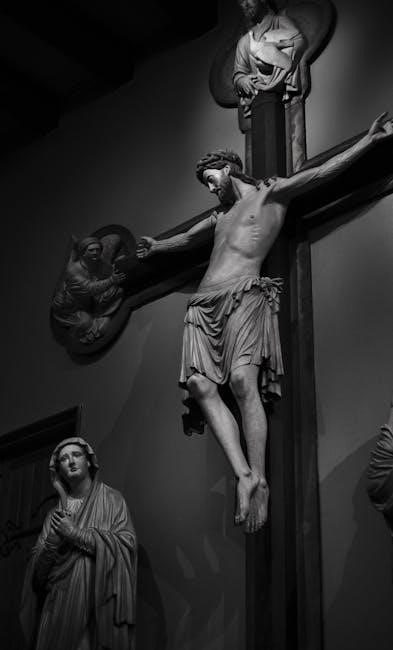
Herod, initially excited to see Jesus – having heard reports of his miracles – questioned him extensively. However, Jesus remained silent, refusing to respond to Herod’s inquiries. Disappointed and frustrated by the lack of engagement, Herod and his soldiers mocked and ridiculed Jesus, treating him with contempt.
Ultimately, Herod found no grounds for condemnation and sent Jesus back to Pilate, further complicating the governor’s already difficult position. The PDF highlights this trial as a display of Herod’s vanity and a further escalation of the injustice inflicted upon Jesus.
Fifth Trial: Back Before Pilate – Attempts at Release
Returning to Pilate, as detailed in a comprehensive “Six Trials of Jesus PDF”, Jesus faced renewed scrutiny. Pilate, increasingly uneasy and recognizing Jesus’s innocence, attempted several times to release him. He hoped to appeal to the Jewish leaders’ sense of mercy, or perhaps to avoid a political incident.
Pilate proposed releasing Jesus according to the custom of releasing a prisoner during Passover. He presented Jesus alongside Barabbas, a notorious criminal, hoping the crowd would choose Jesus. However, the chief priests and elders skillfully incited the crowd to demand Barabbas’s release instead.

The PDF emphasizes Pilate’s internal conflict – his conviction of Jesus’s innocence versus the pressure from the Jewish leaders and the volatile crowd. Despite his attempts, Pilate’s efforts to release Jesus were thwarted by the relentless demands for crucifixion.
Sixth Trial: Before Pilate – The Final Condemnation
As explored within a detailed “Six Trials of Jesus PDF”, Pilate, succumbing to the relentless pressure and fearing a riot, delivered Jesus to be crucified. He washed his hands publicly, declaring his innocence and shifting the responsibility for Jesus’s fate onto the crowd. This act, however, didn’t absolve him of his role.
Pilate ordered Jesus to be scourged – a brutal beating – hoping to satisfy the Jewish leaders. When this failed, he yielded to their demands for crucifixion, a Roman punishment reserved for rebels and criminals. The PDF highlights the tragic irony of Pilate’s decision, condemning an innocent man.
The document further details how Jesus was handed over to Roman soldiers for execution. This final trial represents the culmination of a series of politically and religiously motivated accusations, resulting in the ultimate sacrifice.

Detailed Examination of Each Trial
“Six Trials of Jesus PDF” resources meticulously dissect each hearing – Annas, the Sanhedrin, Pilate (twice), and Herod – revealing legal flaws and motivations behind each proceeding.
Annas’ Interrogation: Illegality and Purpose
A “Six Trials of Jesus PDF” reveals the initial interrogation by Annas, the former High Priest, was deeply flawed legally. Annas lacked the formal authority to conduct a legitimate trial, as that power resided with the Sanhedrin. This questioning was primarily a fact-finding mission, seeking damaging testimony to present before the council.
The purpose wasn’t to establish guilt through due process, but to gather information and formulate accusations. Witnesses were brought before Annas, and their statements were recorded, likely with a biased intent. This preliminary examination aimed to build a case against Jesus, focusing on claims of blasphemy and inciting unrest.
Resources detail how Annas hoped to extract a confession or incriminating statement from Jesus, but Jesus remained largely silent, frustrating Annas’ attempts. This initial, illegal interrogation set the stage for the subsequent trials, demonstrating the predetermined nature of the proceedings against Him.
The Sanhedrin’s Accusation: Blasphemy and its Implications
A detailed “Six Trials of Jesus PDF” highlights the Sanhedrin’s central accusation: blasphemy. This charge stemmed from Jesus’ claims of being the Son of God and equating Himself with God, considered a grave offense under Jewish law. The Sanhedrin, composed of religious leaders and elders, convened to formally try Jesus after Annas’ initial questioning.
However, the Sanhedrin’s trial also suffered from legal irregularities. Their proceedings occurred at night, violating customary practices, and relied on coerced testimony. The implications of a blasphemy conviction were severe – punishable by stoning. Yet, Roman law restricted the Sanhedrin’s power to execute such sentences.
Therefore, the Sanhedrin needed to present a politically palatable charge to Pontius Pilate, framing Jesus as a threat to Roman authority. This manipulation of the accusation demonstrates their desperation to secure Jesus’ condemnation, despite the limitations of their own legal jurisdiction, as explored within the PDF resource.
Pilate’s First Encounter: Assessing the Charges
A comprehensive “Six Trials of Jesus PDF” details Pilate’s initial examination, revealing his skepticism towards the charges brought by the Sanhedrin. Pilate questioned Jesus directly, seeking to understand the accusations of inciting rebellion against Rome. He inquired about Jesus’ kingship, attempting to discern if this claim posed a genuine threat to Caesar’s authority.
Pilate, as a Roman governor, was primarily concerned with maintaining political stability. He found no compelling evidence to support the Sanhedrin’s claims of Jesus being a revolutionary. The PDF resource emphasizes Pilate’s reluctance to condemn Jesus, recognizing His innocence and the lack of substantial proof.
However, Pilate faced mounting pressure from the Jewish leaders, who skillfully exploited his fears of unrest and potential repercussions from Rome. This initial encounter sets the stage for Pilate’s internal conflict and the subsequent attempts to evade responsibility for Jesus’ fate, as meticulously documented within the PDF.
Herod’s Role: Mockery and Return to Pilate
A detailed “Six Trials of Jesus PDF” outlines Herod Antipas’ involvement as a diversionary tactic orchestrated by the Jewish leaders. They strategically sent Jesus to Herod, hoping to shift responsibility and potentially secure a conviction. Herod, though curious about Jesus’ reported miracles, found no grounds for the accusations leveled against Him.
The PDF resource highlights the blatant mockery and disrespect displayed by Herod and his soldiers towards Jesus. They dressed Him in regal attire and subjected Him to ridicule, demonstrating a complete lack of reverence. This display, however, yielded no useful information regarding any legitimate threat posed by Jesus.
Ultimately, Herod, dismissing Jesus as merely a Galilean preacher, sent Him back to Pilate, effectively rejecting jurisdiction over the case. This transfer back to Pilate intensified the pressure on the Roman governor, as documented extensively within the “Six Trials of Jesus PDF,” accelerating the path towards crucifixion.
Pilate’s Dilemma: Political Pressure and Conscience
A comprehensive “Six Trials of Jesus PDF” meticulously details Pontius Pilate’s agonizing internal conflict. He recognized Jesus’ innocence, repeatedly attempting to release Him, yet faced immense political pressure from the Jewish leaders and a volatile crowd. The PDF emphasizes Pilate’s fear of unrest and potential repercussions for his governorship if he defied the demands for crucifixion.
The resource illustrates Pilate’s attempts to appease the crowd – offering the custom of releasing a prisoner during Passover, and questioning Jesus privately, seeking justification for the charges. However, the Jewish leaders skillfully manipulated public sentiment, falsely accusing Jesus of sedition against Caesar, a direct threat to Pilate’s authority.
The “Six Trials of Jesus PDF” portrays Pilate’s ultimate surrender to political expediency over his own conscience, a tragic decision driven by self-preservation. His infamous handwashing symbolizes his attempt to absolve himself of responsibility, a gesture ultimately failing to alleviate his moral burden.
The Crowd’s Demand: Barabbas and Crucifixion
A detailed “Six Trials of Jesus PDF” highlights the pivotal moment when the crowd, incited by the Jewish leaders, demanded the release of Barabbas, a notorious criminal, and the crucifixion of Jesus. This scene vividly illustrates the power of manipulated public opinion and the tragic consequences of mob mentality.
The PDF emphasizes the stark contrast between Barabbas’ violent crimes and Jesus’ blameless character. Pilate, yielding to the escalating pressure, presented Jesus as a potential Passover offering, hoping to evoke sympathy, but the crowd vehemently rejected this plea. Their insistent cries for crucifixion overwhelmed any remaining hesitation.
The resource meticulously documents the crowd’s collective responsibility in Jesus’ condemnation, showcasing how easily swayed they were by false accusations and political maneuvering. The “Six Trials of Jesus PDF” underscores this as a critical turning point, solidifying the path to Jesus’ suffering and death.

Key Figures and Their Motivations
“Six Trials of Jesus PDF” resources dissect the motivations of key players – Jewish leaders, Pilate, Herod, and the crowd – revealing complex agendas and power dynamics.
The Role of the Jewish Leaders
Examining the “Six Trials of Jesus PDF” reveals the central role of Jewish leaders in orchestrating Jesus’s condemnation. Driven by a perceived threat to their religious authority and the Temple order, they sought to eliminate Jesus. Their initial trial before Annas, though illegal, established a predetermined narrative of blasphemy.
The Sanhedrin’s subsequent session, while attempting a semblance of legality, was similarly biased, focusing on accusations of claiming to be the Messiah and challenging Temple practices. These leaders skillfully manipulated public opinion and exerted pressure on Pontius Pilate, presenting Jesus as a political agitator to secure a conviction.
The PDF resources highlight their relentless pursuit of Jesus’s execution, even resorting to inciting the crowd against him. Their motivations stemmed from a desire to maintain control and preserve their position within Jewish society, ultimately leading to their complicity in Jesus’s crucifixion.
Pontius Pilate’s Perspective and Actions
Analyzing the “Six Trials of Jesus PDF” demonstrates Pilate’s complex and ultimately tragic role. Initially, he sought information, questioning Jesus and finding no grounds for capital punishment. However, facing mounting pressure from Jewish leaders and fearing unrest, Pilate’s perspective shifted towards political expediency.
The PDF details Pilate’s attempts to evade responsibility, offering alternatives like releasing Jesus during Passover, a custom of pardoning a prisoner. He even ordered Jesus to be flogged, hoping to appease the crowd and avoid a confrontation with Rome.
Despite acknowledging Jesus’s innocence, Pilate succumbed to the demands of the mob, driven by fear of rebellion and potential repercussions from Caesar. His final act – washing his hands of the matter – symbolizes his moral failure and highlights the devastating consequences of prioritizing political stability over justice.
Herod Antipas’ Involvement
Examining the “Six Trials of Jesus PDF” reveals a curious interlude: Jesus’s transfer to Herod Antipas, the tetrarch of Galilee. This occurred because Jesus was accused of claiming to be “King of the Jews,” a title that piqued Herod’s interest, and potentially threatened his authority.
Herod, residing in Caesarea, treated Jesus with contempt, questioning him but receiving no response. The PDF highlights Herod’s mockery of Jesus, dressing him in royal garments and sending him back to Pilate, essentially dismissing the case as a matter for Roman jurisdiction.
Herod’s involvement wasn’t driven by legal concern, but by personal vanity and a desire to maintain his power. He saw Jesus not as a religious threat, but as a potential rival. This brief, yet significant, episode underscores the political complexities surrounding Jesus’s trial and the fragmented authority within Judea.
The Crowd’s Influence and Responsibility
Analyzing the “Six Trials of Jesus PDF” demonstrates the pivotal, and troubling, role of the crowd in Jesus’s condemnation. The Jewish leaders skillfully manipulated public sentiment, inciting the masses against Jesus through accusations and appeals to nationalistic fervor.
Pilate, seeking to avoid unrest, repeatedly attempted to release Jesus, but the crowd vehemently demanded his crucifixion, specifically requesting the release of Barabbas, a known criminal, instead. This highlights a disturbing willingness to prioritize political stability over justice.
The PDF emphasizes the crowd’s collective responsibility for Jesus’s fate. Their insistent cries of “Crucify him!” directly influenced Pilate’s final decision. While the leaders instigated, the crowd actively participated in demanding an innocent man’s death, a stark illustration of mob mentality and its devastating consequences.

Theological Implications and Modern Relevance
“Six Trials of Jesus PDF” resources illuminate fulfilled prophecy and the sacrificial lamb concept. These trials resonate today, prompting reflection on justice, power dynamics, and unwavering faith.
The Fulfillment of Prophecy
Examining the “Six Trials of Jesus PDF” reveals a striking alignment with Old Testament prophecies concerning the Messiah’s suffering and rejection. Isaiah 53, for instance, vividly depicts a servant “despised and rejected by mankind, a man of suffering, and familiar with pain.” The detailed accounts of the trials – the false accusations, the mockery, the relentless pursuit of condemnation – echo these ancient predictions with remarkable precision.
The very nature of the accusations leveled against Jesus, particularly the claim of blasphemy, directly relates to prophecies concerning a Messiah who would challenge existing religious authority. The swiftness and illegality of the proceedings, as often highlighted in these PDF resources, underscore the predetermined nature of the outcome, fulfilling prophecies of betrayal and unjust judgment.
Furthermore, the specific details surrounding His arrest in Gethsemane and the subsequent transfer between Annas, the Sanhedrin, Pilate, and Herod, all contribute to a complex tapestry woven with prophetic threads. Studying these trials through the lens of fulfilled prophecy deepens our understanding of Jesus’s identity and mission, demonstrating His role as the promised Messiah.
The Concept of Sacrificial Lamb

Analyzing the “Six Trials of Jesus PDF” illuminates Jesus’s role as the ultimate sacrificial lamb, a central tenet of Christian theology. The Old Testament sacrificial system foreshadowed His atoning death, with lambs offered to cover the sins of the people. Jesus, presented during the trials and ultimately condemned, willingly takes on the weight of human sin.
The detailed accounts within these resources demonstrate how Jesus, though innocent, is subjected to a legal process designed to condemn Him. This parallels the selection of a perfect, unblemished lamb for sacrifice. His silence during much of the questioning, and His acceptance of the unjust verdict, highlight His voluntary submission to God’s will.
The timing of the trials, coinciding with Passover – a festival commemorating the sacrificial lamb that saved the Israelites from death – further emphasizes this connection. The PDF materials often explore how Jesus’s death on the cross provides a complete and final atonement for sin, fulfilling the symbolism of the sacrificial lamb and offering redemption to all who believe.
Lessons on Justice, Power, and Faith
Examining the “Six Trials of Jesus PDF” reveals profound lessons concerning justice, power dynamics, and unwavering faith. The trials expose a blatant miscarriage of justice, driven by religious jealousy and political expediency. Pilate’s struggle demonstrates the corrupting influence of power and the difficulty of standing for truth when facing societal pressure.
The detailed accounts within these resources highlight the contrast between earthly power and divine authority. Despite being unjustly accused and condemned, Jesus maintains dignity and demonstrates unwavering faith in His Father’s plan. His silence and acceptance of suffering serve as a powerful example of trust and obedience.
The PDF materials often explore how the trials challenge us to examine our own beliefs and actions. They prompt reflection on the importance of defending the vulnerable, resisting injustice, and remaining steadfast in our faith, even in the face of adversity. Ultimately, the trials underscore the triumph of good over evil and the enduring power of God’s love.
The “Six Trials of Jesus PDF” Resource: Availability and Content
Numerous “Six Trials of Jesus PDF” resources are readily available online, offering detailed analyses of this pivotal event. These documents typically provide a chronological breakdown of each trial – before Annas, the Sanhedrin, Pilate, Herod, and back to Pilate – outlining the accusations, witnesses, and key decisions made at each stage.
Content commonly includes scriptural references (Luke, Matthew, Mark, John), historical context regarding Jewish law and Roman governance, and theological interpretations of the events. Many PDFs feature charts comparing the accounts from different Gospels, highlighting both agreements and discrepancies.
Accessibility varies; some are freely downloadable from theological websites and Bible study resources, while others may require purchase or registration. Resources like those from sacred-texts.com offer historical perspectives. These PDFs aim to provide a comprehensive understanding of the legal and spiritual implications of Jesus’ trials, fostering deeper study and reflection.
Comments